System-5 — an RCA 1802 card computer
System-5 is the RCA 1802 computer I built in 2004–05 to run Mike Riley's ELF/OS. It is a card system: a passive backplane carries a 30-pin bus, and each function is a card plugged into it. The bus is the one I defined for my wire-wrapped System-4 (1979–82), so old wire-wrap cards and new PCB cards could share the backplane while the machine was rebuilt one card at a time. All the 2005 boards were designed in Eagle 4.x.
In 2026 the designs came back to life: the surviving boards converted to KiCad and proven against their schematics, a manual written from the netlists, an emulator that runs the real ROM, and new boards made: a memory card, and a bus driver card that is already bringing the old cards up on the bench. The next machine is being designed too: a 36-pin bus with a new CPU card and a front-panel IO card (below).
I'm Ken Rother. I designed and built System-5. Claude, Anthropic's AI, has been directly involved in converting the boards, the manual, the emulator and this site.
At a glance
| CPU | CDP1802, about 1.76 MHz, 4.5 µs per machine cycle |
| Bus | 30 pins, kept from System-4: D0–D7, multiplexed A0–A7, TPA/TPB, -MRD/-MRW, N0–N2, Q, -EF, -INT, -VMA |
| Memory | 28K of RAM (0000–6FFF), EPROM 8000–EFFF on the memory card, a 4K boot ROM (HBIOS) at F000 on the CPU card |
| Display | a 64 × 16 text screen from the 6845 card (BYTE, May 1979), composite video |
| Keyboard | PS/2, through a PAK-VI decoder and a PIC16F84 into a CDP1852 port |
| Disk | a CompactFlash card in an 8-bit IDE interface (Mike Riley's design) |
| Software | HBIOS (my video and keyboard code on Mike Riley's BIOS), the monitor, ELF/OS booted from the CF card |
The cards
-
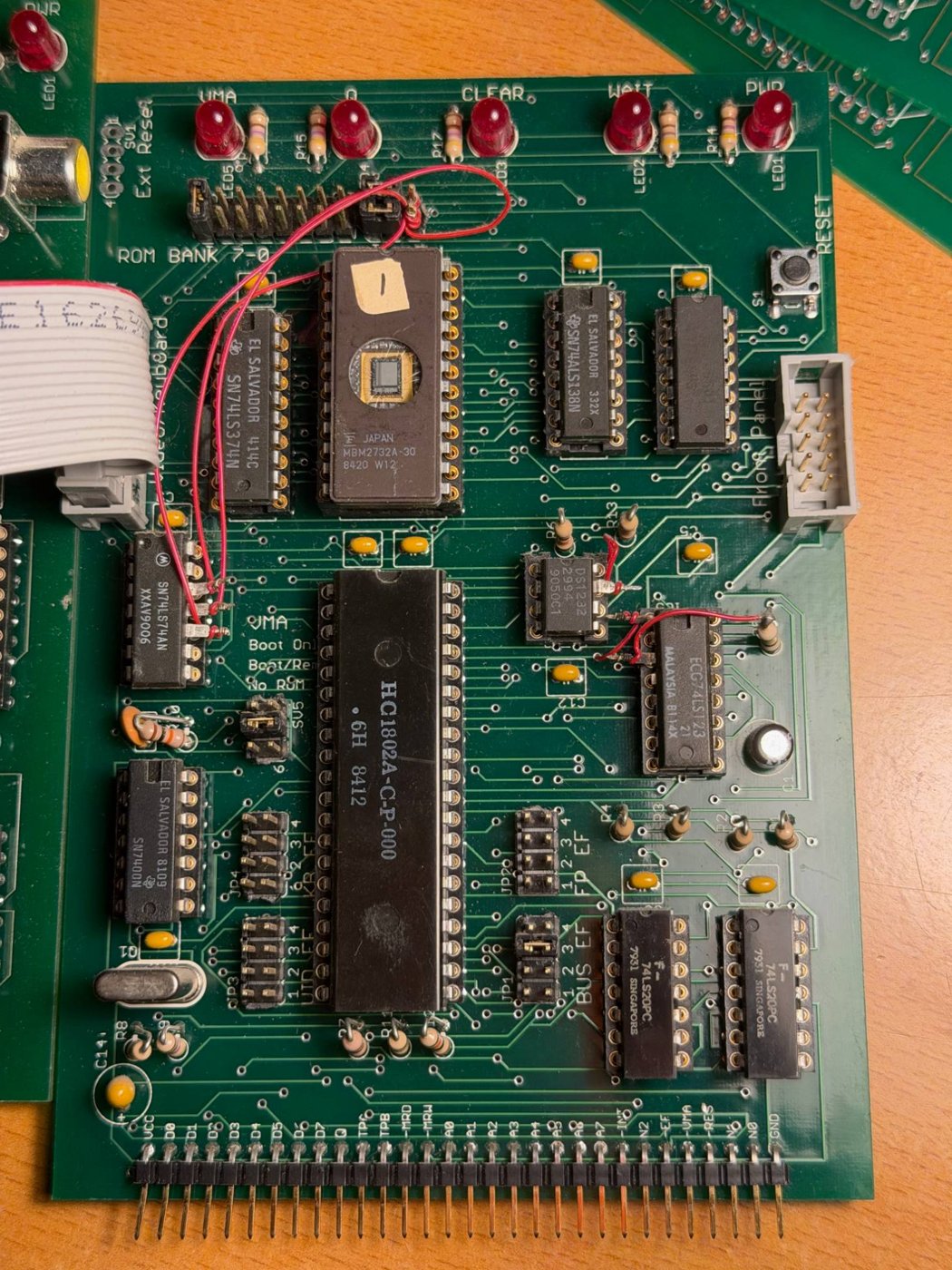
CPU — the 1802, its clock, reset and run control, and the 4K boot EPROM (Rev A, reworked, in the machine).
-
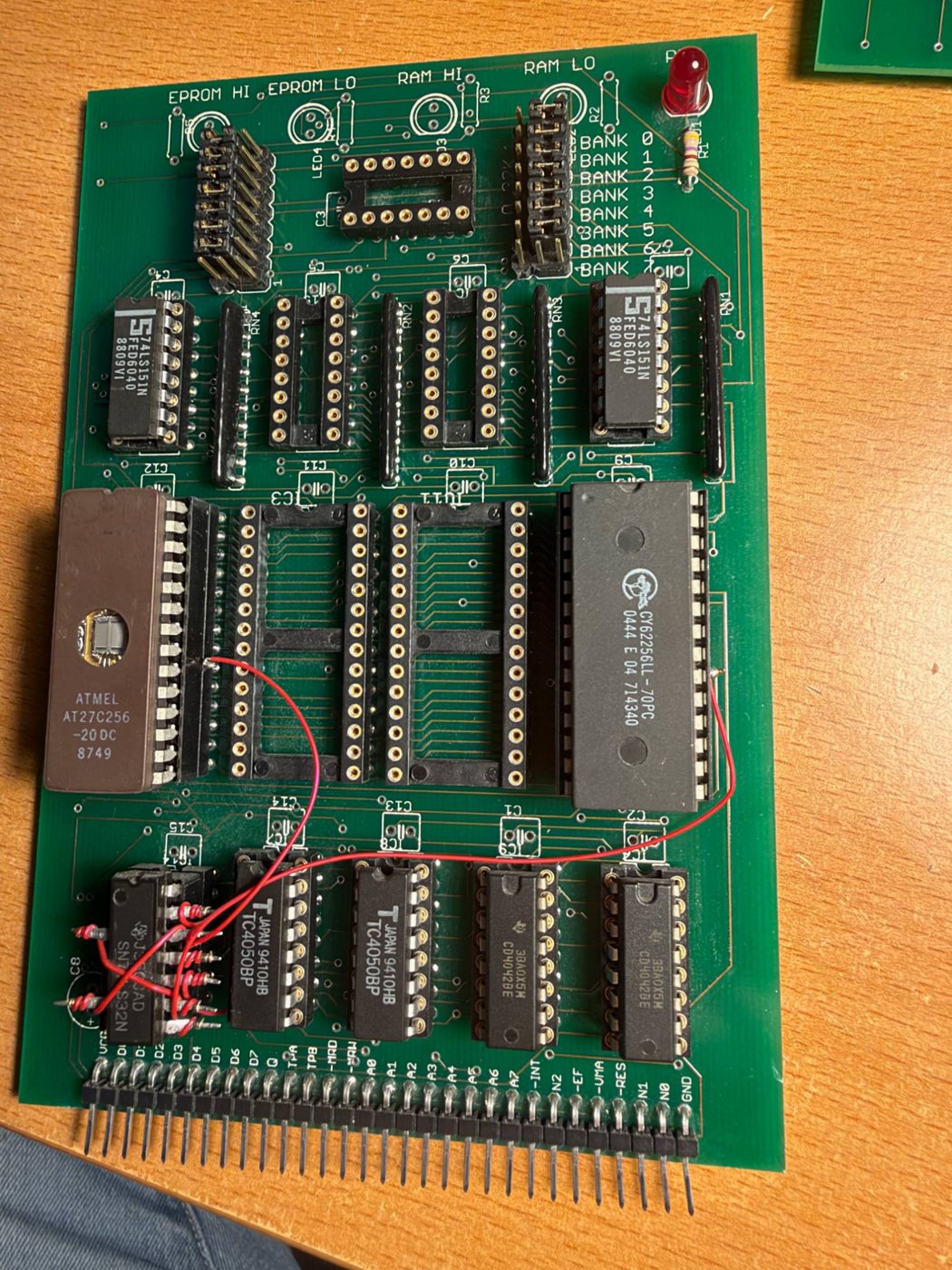
Memory — 32K RAM and 32K EPROM sockets, every 4K block set by a jumper (Rev B in the machine; Rev E ordered 2026-10-20).
-
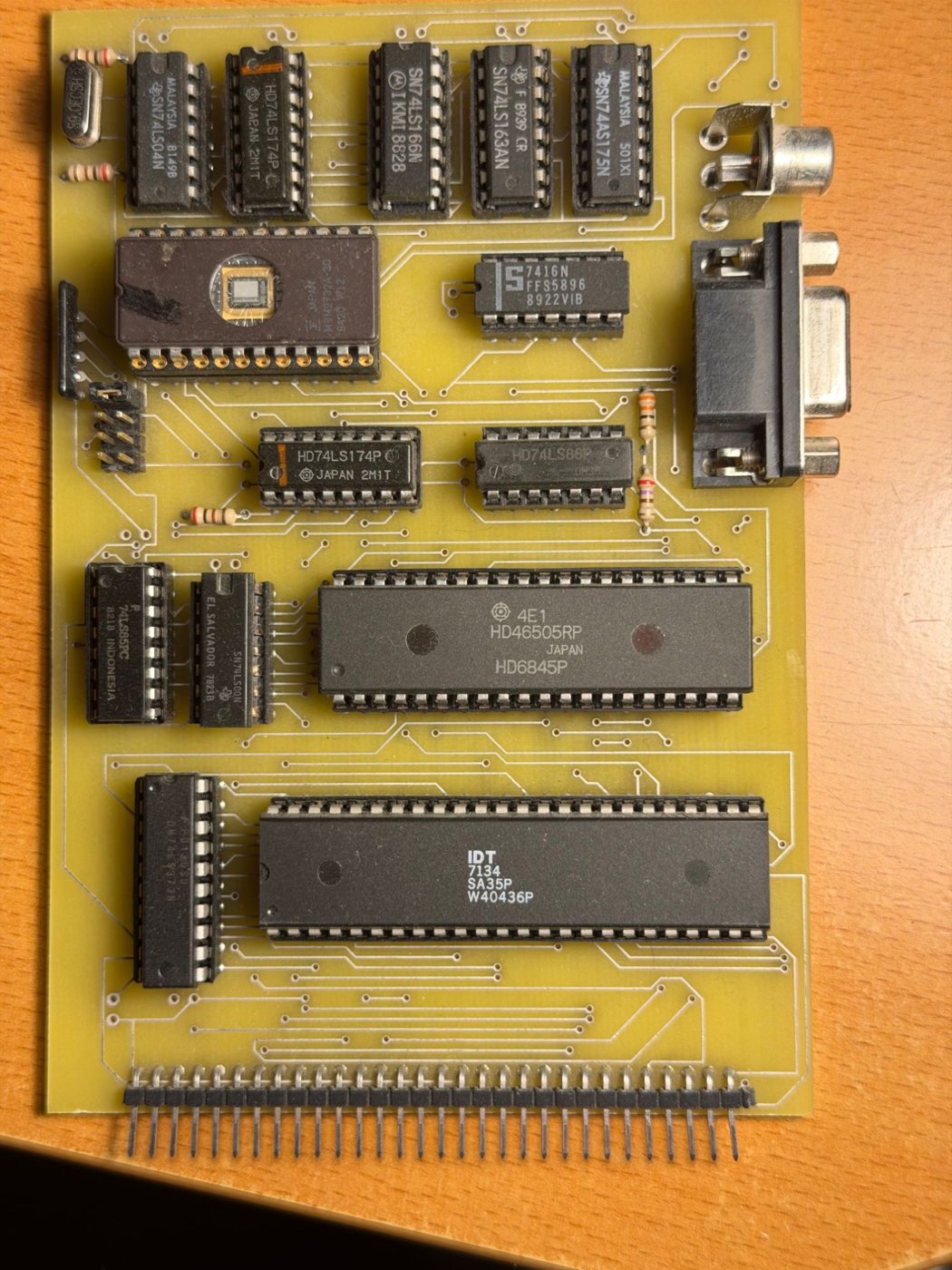
6845 video — the 64 × 16 text display from BYTE, May 1979 (Rev B, the working card).
-
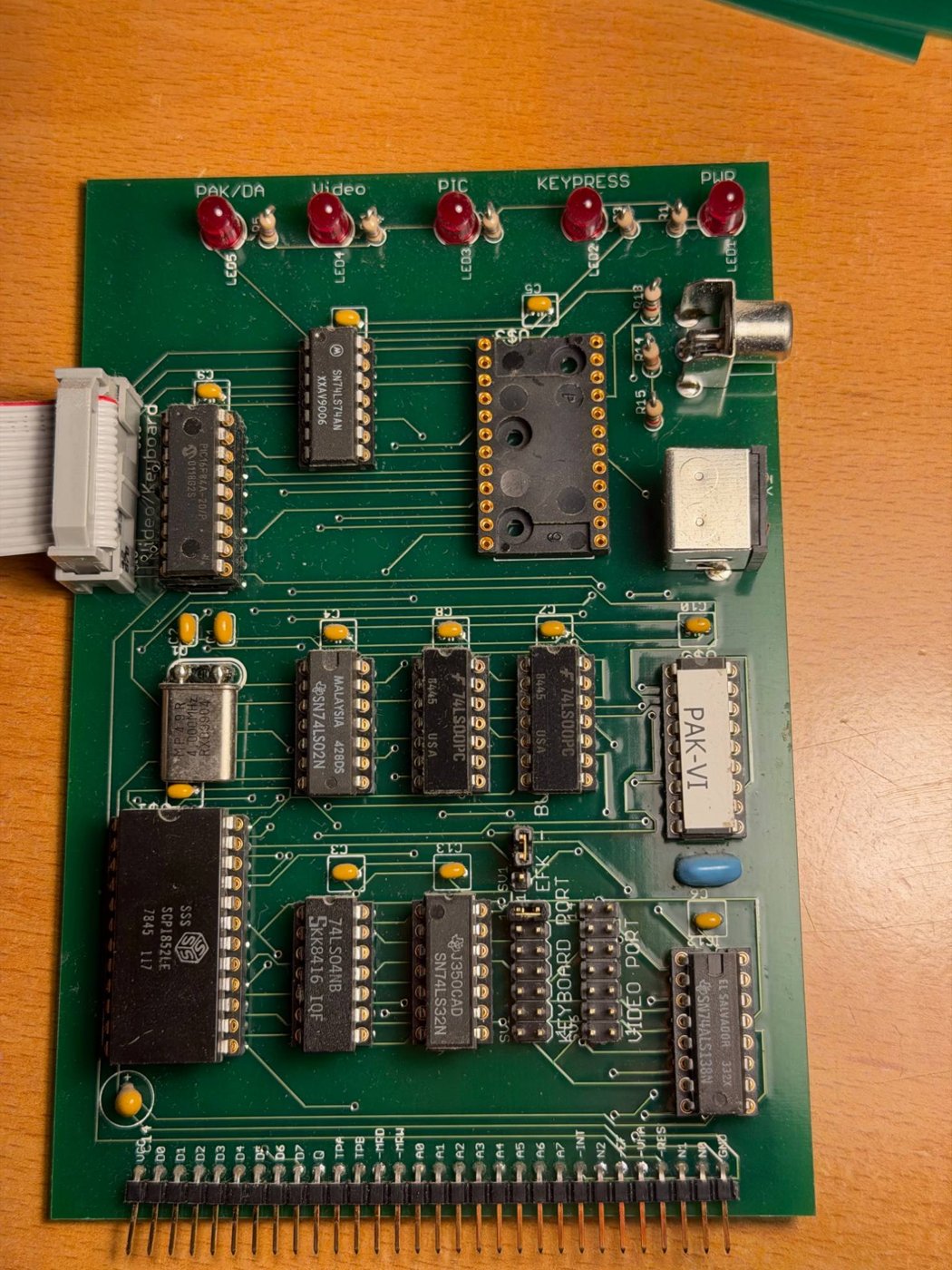
IO — the PS/2 keyboard port, and a CDP1861 graphics chip that was never used (Rev A).
-
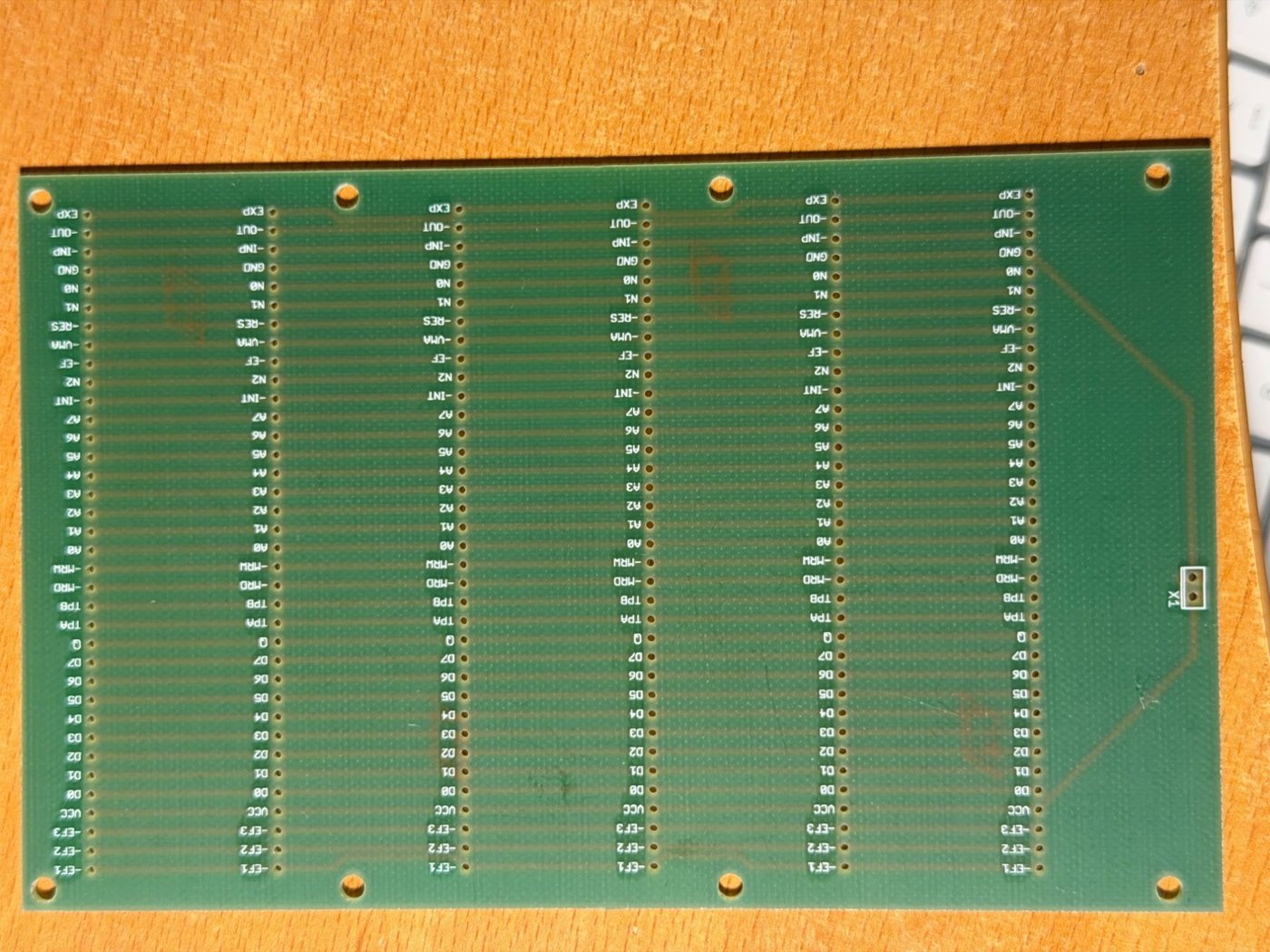
Backplane and bus — the 30-pin bus on the 2009 backplane: six 36-pin slots.
IDE / CF holds the disk, and the bus driver (new in 2026) runs bus cycles from an Arduino Nano in place of the CPU, to bring up the other cards. Which revisions were made, ordered or only drawn: Boards fabricated.
Next: the 36-pin machine
The six spare pins of the 36-pin slots are being given jobs: the three extra 1802 flags (-EF1 to -EF3), -PAUSE and -DMAIN for front-panel control, and SC0 to show instruction fetches (the 36-pin extension). New cards for it, all drawn in KiCad, none ordered yet:
- Backplane Rev D — eight 36-pin slots, power switch, fuse and reverse-polarity protection.
- CPU Rev D — just the 1802 and its 4K boot EPROM, at 2 MHz or from an external clock; a load-then-run flag so a program toggled in runs from RAM.
- IO panel — the ELF-style front panel: eight toggles, eight LEDs, two TIL311 hex displays, Q, INPUT, RUN and LOAD. The emulator already runs a program toggled in through it.
- 6845 video Rev C — design notes: Rev B's display with the PS/2 keyboard moved onto it, and a CRTC fast enough for 2 MHz.
Where to start
- The system and how it works — the cards, a bus cycle, the memory and I/O maps, how the machine starts.
- Programmer's guide — the devices, the monitor, BIOS calls, ELF/OS.
- The manual as PDFs — the system, the bus and every card, also as one book.
- Build rules — what every System-5 board follows, and the exceptions.